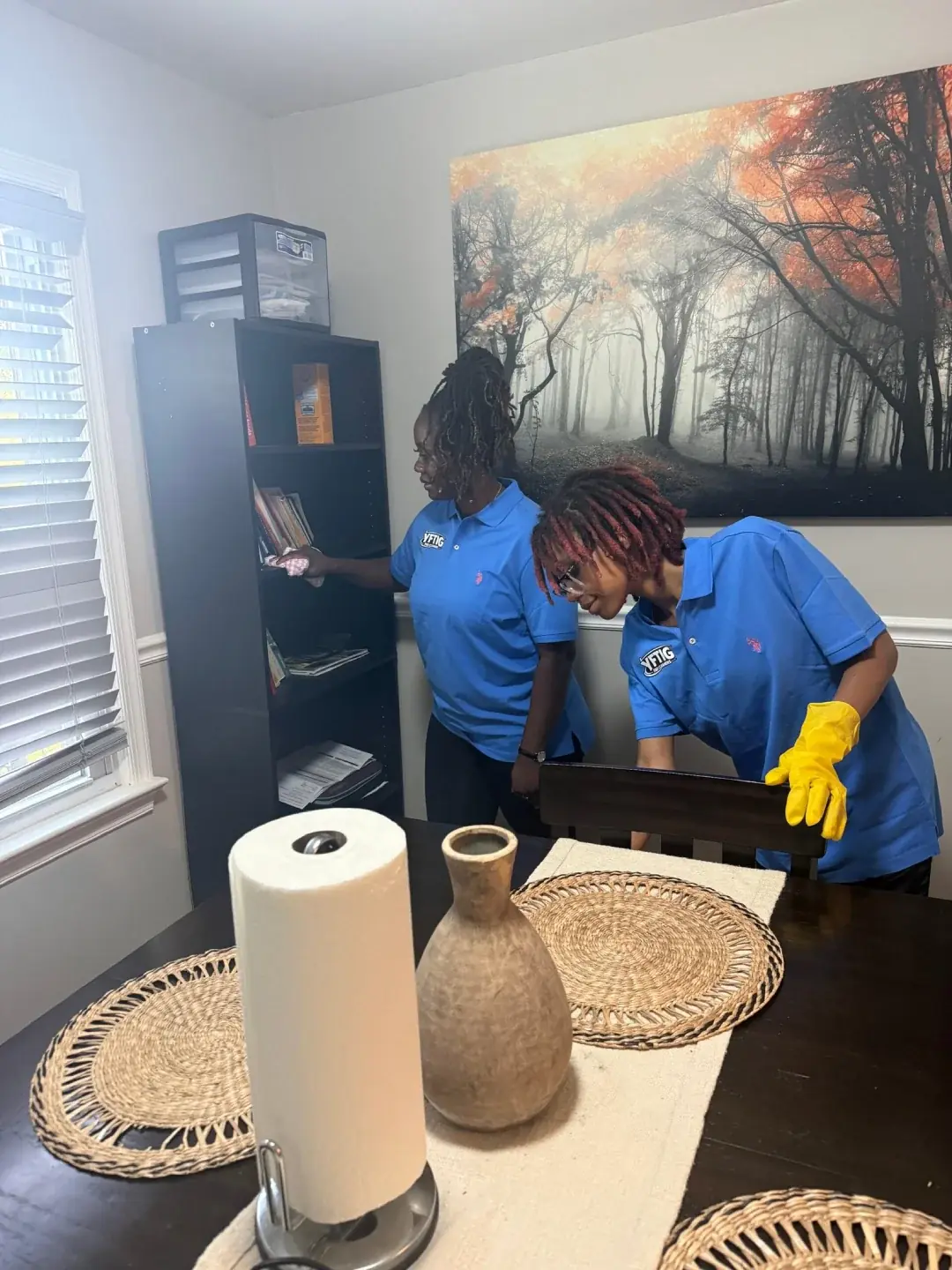
What post-construction cleaning covers
Construction dust is not ordinary dust. Drywall sanding produces a powder fine enough to drift through closed doors, settle inside cabinet drawers, coat the top of every door, and cling to window tracks and outlet covers. Wipe it with a dry cloth and it smears. Run a household vacuum over it and the fine particles can pass through a basic filter and land right back on the floor. Post-construction cleaning is built for that problem. We remove settled dust and light construction residue from accessible surfaces after a renovation or new build: walls and trim, cabinets inside and out, countertops, fixtures, windows from the inside, sills and tracks, vents, and floors. It's what turns a finished project into a room you'd actually want to bring furniture into.
This service is distinct from a deep clean because the dirt itself is different, and the methods follow. A deep clean fights grease, soap scum and slow buildup from daily life. Post-construction cleaning fights fine particulate and the leftovers of the trades: paint specks on glass, sticker and label residue on new fixtures and windows, light grout haze on tile, caulk smudges and sawdust in corners. It's typically done in phases. A rough clean happens after the heavy work is finished, clearing loose debris and the first layer of dust so trades can do finish work. A final clean happens once the work is truly done, when the space gets the full detailed treatment. It is not hazardous material work, mold remediation or debris hauling.
Several factors decide how long a post-construction clean takes. Scope of the project comes first: a single bathroom remodel is a short job, while a whole-house gut renovation or a new build with every surface dusted takes much longer. Containment matters a lot. If the contractor used plastic sheeting and zipper doors, the dust may be limited to the work area; if not, it's likely in every room and inside the HVAC registers. The amount of cabinetry and trim matters, since each cabinet box and every length of crown molding has to be wiped, often more than once. Window count matters for sticker removal. And the number of passes needed is real: fine dust keeps settling for a day or two, so a final touch-up wipe is sometimes worth scheduling.
Post-construction cleans are booked by homeowners at the end of a renovation who are ready to move back into a kitchen or bathroom, by buyers closing on new construction in the subdivisions growing along I-95 in Stafford and Spotsylvania, and by contractors and builders who want a clean handover for their clients or a property ready for listing photos. Landlords book them after renovating a rental between tenants. Small businesses book them after a tenant improvement on an office or shop. In each case, the timing matters: book the rough clean once demolition and heavy sanding are done, and book the final clean after the last trade has packed up, the paint is dry and the punch list is closed, so you're not paying to clean twice.
After a good post-construction clean, you can run a hand across any surface and come away with a clean palm. Cabinet shelves and drawers are free of dust and sawdust. The tops of doors, window casings and crown molding are clean. Window glass is clear on the interior side, without paint specks or label glue. Fixtures shine and their protective films and stickers are gone. Outlet covers, switch plates and vent registers have been wiped. Tile is free of light haze. Floors have been vacuumed with fine-dust filtration and mopped, and there's no gritty feel underfoot. Fine dust can keep settling for a day or so after cleaning, which is normal and the reason a short touch-up visit is sometimes worth scheduling.
Room-by-room checklist
Kitchen
- Vacuum and wipe inside all cabinets and drawers
- Wipe cabinet exteriors, tops and hardware
- Clean countertops and remove light adhesive residue
- Clean appliance exteriors and peel protective film where requested
- Clean inside appliances that collected dust
- Wipe the backsplash and remove light grout haze
- Clean the sink and faucet
- Vacuum and mop floors
Bathrooms
- Remove stickers and labels from fixtures, tubs and glass
- Clean light grout haze from tile surfaces
- Wipe vanities inside and out
- Clean toilets, tubs, showers and sinks
- Polish mirrors and shower glass
- Wipe exhaust fan covers
- Vacuum and mop floors
Walls, trim and doors
- Dust walls top to bottom with appropriate tools
- Wipe baseboards, door casings and crown molding
- Dust and wipe the tops of doors
- Wipe switch plates and outlet covers
- Spot-clean light marks and fingerprints where the paint has cured
Windows and doors
- Clean interior window glass
- Remove manufacturer stickers and label residue
- Remove light paint specks from glass
- Vacuum and wipe window tracks and sills
- Clean sliding door tracks
- Wipe interior door glass and frames
Fixtures and vents
- Dust light fixtures and ceiling fans
- Wipe vent registers and return grilles
- Dust shelving and built-ins
- Wipe closet shelves and rods
- Wipe stair railings and spindles
Floors
- Vacuum with fine-dust filtration
- Vacuum corners, edges and closets
- Mop hard floors, repeating as needed
- Vacuum carpet thoroughly
- Clean thresholds and transition strips
How the visit runs
Walk the scope
Tell us the size of the project, which rooms were worked on, whether the contractor used containment, and whether you want a rough clean, a final clean or both.
Time it to the trades
We'll schedule around the contractor's punch list so the final clean happens after paint is dry and the last trade is gone. Dates are confirmed by email and text.
Dry dust first
Fine dust is removed from high surfaces, trim, walls and cabinet interiors with dusting tools and filtered vacuums before any wet wiping, so it doesn't turn into paste.
Wipe and remove residue
Surfaces are wiped, sticker and label residue is removed, light paint specks are lifted from glass, and haze is cleaned from tile.
Floors in multiple passes
Floors are vacuumed and mopped, often more than once, because fine dust keeps falling as the crew works above it.
Final hand check
The crew runs a hand over surfaces room by room to catch remaining film, and anything that needs another pass gets it before they leave.
How long it takes
Post-construction cleans range more widely than any other service. A single bathroom remodel with good containment might take a cleaner a few hours. A full kitchen renovation that spread dust through the main floor often takes a team most of a day. A whole-house renovation or a new build with all-new cabinetry, trim and windows can take a team one to two full days, depending on size. Rough cleans are generally quicker than final cleans, since they focus on loose debris and the first layer of dust. If you can, plan a brief touch-up visit a day or two after the final clean to catch dust that settles out of the air.
Best for
- Homeowners finishing a kitchen, bathroom or basement renovation
- Buyers of new construction homes before move-in
- Builders and contractors preparing a clean client handover
- Landlords finishing a rental renovation between tenants
- Businesses after an office or retail build-out
- Additions, sunrooms and finished-basement projects
How to get ready
- Confirm all trades have finished and the punch list is closed before a final clean
- Have the contractor remove debris, scrap and packaging
- Make sure water and power are on
- Let paint cure as recommended before we wipe walls
- Tell us about any delicate new finishes, like natural stone or unsealed wood
- Replace or ask your HVAC contractor about the air filter after construction
Not part of this service
- Lead, asbestos, silica abatement or any hazardous material cleanup
- Mold remediation or water damage restoration
- Hauling construction debris, scrap, drywall or packaging
- Removing heavy paint, cured mortar, thick grout film or adhesive buildup
- HVAC duct cleaning or furnace filter replacement
- Exterior cleaning, pressure washing or exterior windows above the ground floor
- Cleaning while trades are still actively working in the space
Post-Construction Cleaning near you
We provide post-construction cleaning in every community below. Each page covers what the job looks like in that specific town: the housing, the water, the commute and the season.
- Stafford0 mi
- Aquia Harbour3 mi
- Falmouth7.5 mi
- Fredericksburg8.7 mi
- Quantico9.3 mi
- Triangle9.8 mi
- Dumfries11 mi
- Montclair13.6 mi
- Dale City15.8 mi
- King George16.1 mi
- Massaponax16.5 mi
- Spotsylvania18.2 mi
- Woodbridge18.4 mi
- Lake Ridge19.3 mi
- Occoquan19.8 mi
- Dahlgren20.4 mi
- Lake of the Woods20.4 mi
- Thornburg21 mi
- Nokesville21.2 mi
- Bealeton21.8 mi
- Lorton21.8 mi
- Bristow21.9 mi
- Manassas23 mi
- Fort Belvoir24.6 mi
- Manassas Park25.2 mi
- Bowling Green26 mi
- Burke26.7 mi
- Colonial Beach26.7 mi
- Springfield28 mi
- Gainesville28.1 mi
- Warrenton29 mi
Post-Construction Cleaning FAQ
What's the difference between a rough clean and a final clean?
A rough clean happens after demolition and heavy work, but before finish trades like painters, flooring installers and trim carpenters. It clears loose debris and the first heavy layer of dust so they can work cleanly. A final clean happens when everything is truly done: the detailed wipe-down of every surface, cabinet interiors, windows, fixtures and floors. Many projects need only the final clean, while larger ones benefit from both.
How soon after construction should I schedule cleaning?
Schedule the final clean once the last trade has packed up, the punch list items are complete and the paint has cured. If you clean while touch-ups are still happening, you'll likely need a second visit. A good rule is to have the contractor confirm they're finished before you book. If the job runs over, give us 48 hours' notice and we'll move your date.
Do you remove paint specks and sticker residue?
Yes. Removing manufacturer stickers from windows, tubs and fixtures, and lifting light paint specks and label glue from glass and hard surfaces, is a standard part of post-construction cleaning. We use methods appropriate to each surface to avoid scratching. Heavy paint overspray, cured mortar, or thick grout film is a different matter and is usually the responsibility of the trade who left it.
Can you clean while contractors are still working?
We don't recommend it. If trades are still cutting, sanding or painting, dust and debris will settle right back onto cleaned surfaces, and you'd end up paying for work that has to be redone. The exception is a planned rough clean between phases, which is scheduled with the contractor so finish trades can start in a cleaner space. Coordinating that timing up front saves money and keeps the project moving.
Do you handle hazardous materials like lead dust or asbestos?
No. Our post-construction cleaning covers settled dust and light construction residue from normal renovation and new-build work. If your project involved disturbing lead paint, asbestos, or other hazardous materials, that cleanup needs to be handled by certified abatement professionals before we come in. The same applies to mold remediation and water damage restoration. Once that specialized work is complete and cleared, we're glad to handle the final cleaning.
How long does post-construction cleaning take?
It depends on the project scope and how far the dust spread. A contained bathroom remodel might take a few hours. A kitchen renovation that spread dust through the main floor can take a team most of a day. A full new build or whole-house renovation can take one to two days. We'll ask about containment and room count to estimate a realistic window.
Why does dust keep showing up after cleaning?
Fine drywall dust stays suspended in the air for a while and continues to settle from ductwork and high surfaces for a day or two after construction ends. Running the HVAC with a fresh filter helps clear it, and a contractor can advise on your system. If a light film appears a day or two later, a brief touch-up visit usually takes care of it.
Do you bring the right equipment for construction dust?
Yes. We bring vacuums with fine-dust filtration, extension dusters for high trim, scrapers suited for glass, microfiber, and the cleaning products for residue and light haze. You don't need to provide anything beyond running water and power. If your new surfaces call for a specific cleaner, such as a stone-safe product recommended by your countertop installer, let us know and we'll use it.