After the Plaster Comes Down: Cleaning Up a Restoration
Bowling Green has a steady stream of restoration work. Someone buys a house near the courthouse and spends a year bringing back the floors, the windows and the original mantels. A brick ranch on a side street gets its first bathroom update since it was built. A manufactured home out in the county gets new flooring and a deck enclosed as a sunroom. Whatever the project, the final days leave the same thing behind: a gray or white film on every ledge, grit in floorboard seams and dust lying inside cabinets that were supposedly protected.
We clean what has settled once the trades are done. That means working walls and trim from the top down, vacuuming and wiping vent grilles and returns, clearing dust from inside drawers, cabinets and closets, peeling labels and wiping light residue off new glass and fixtures where it is safe to do so, and finishing each floor the way its material needs. Old heart pine and oak boards get a dry pass first to pull grit out of the seams before any damp cleaning, so nothing is dragged across a fresh finish.
This is cleanup of accessible dust and residue, not abatement. Older Bowling Green homes can contain materials that call for professional testing and removal, and any of that work, along with mold remediation or biohazard cleanup, belongs with a licensed specialist before we arrive. We will not disturb anything in that category. If floors were refinished, wait for the finisher's cure time before booking, and tell us which rooms were part of the job so we can plan the time properly.
Restorations in Bowling Green often involve specialty trades, like floor refinishers, plaster repair and window restoration, booked weeks apart, so the true last day can drift. Book us after the last trade has left and any finish has cured. Older houses near the courthouse often have rooms that were closed off during work, so tell us whether those need the full clean. Mark original hardware or antique fixtures that should be wiped only with a dry cloth. Contractors working on county properties often stage a dumpster or debris pile near the entry, so make sure it is cleared from the path we will use. A full restoration clean on a large old house usually takes a full day or more.
What's on the Post-Construction checklist
Every post-construction cleaning visit in Bowling Green follows the same room-by-room list we use everywhere, then gets adjusted for your home. The full breakdown lives on our post-construction cleaning page; here are the areas it covers:
- Kitchen
- Bathrooms
- Walls, trim and doors
- Windows and doors
- Fixtures and vents
- Floors
Common issues we handle in Bowling Green
Questions from Bowling Green clients
Plaster repair left a film on our original windows. Can you clean the old glass safely?
Yes, with care. Original wavy glass in Bowling Green homes is often thinner than modern glass, and old glazing putty can be brittle. We use soft cloths and gentle cleaners and avoid razor scrapers on old panes, since they can scratch the glass or chip the putty. Plaster film usually comes off with patience. Paint spatter that has bonded to the glass may need a window restoration specialist.
Can you clean the dust out of built-in bookcases and glass-front cabinets after the work?
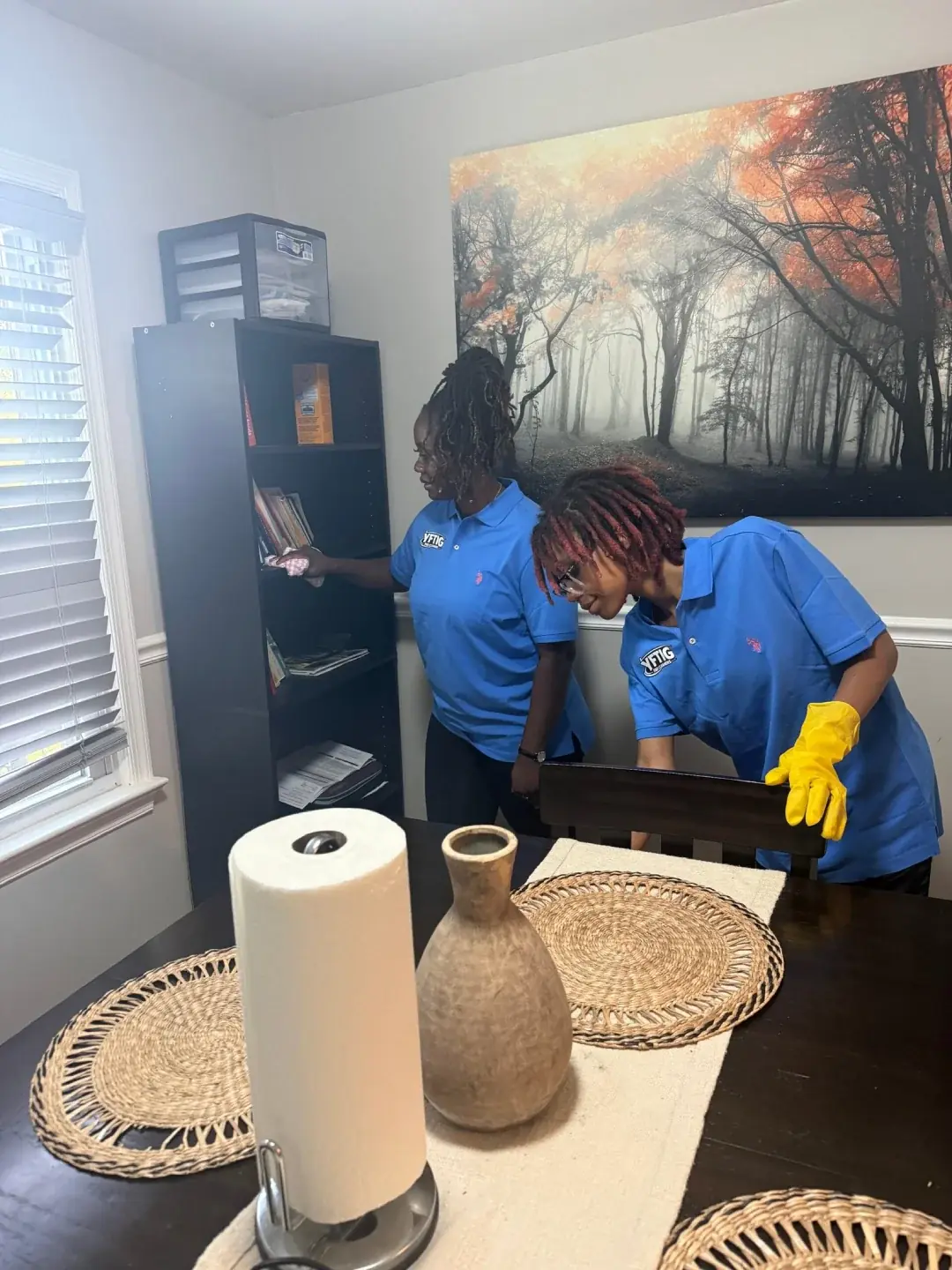
Yes. Built-ins are common in older Bowling Green homes, and renovation dust gets onto every shelf, into the corners and behind glass doors even when they were taped shut. Empty the shelves before we arrive so we can wipe the full surface, and let us know whether the wood is original finish. We dust first, then wipe with a barely damp cloth so old finishes are not damaged.
How long does post-construction cleaning take?
It depends on the project scope and how far the dust spread. A contained bathroom remodel might take a few hours. A kitchen renovation that spread dust through the main floor can take a team most of a day. A full new build or whole-house renovation can take one to two days. We'll ask about containment and room count to estimate a realistic window.